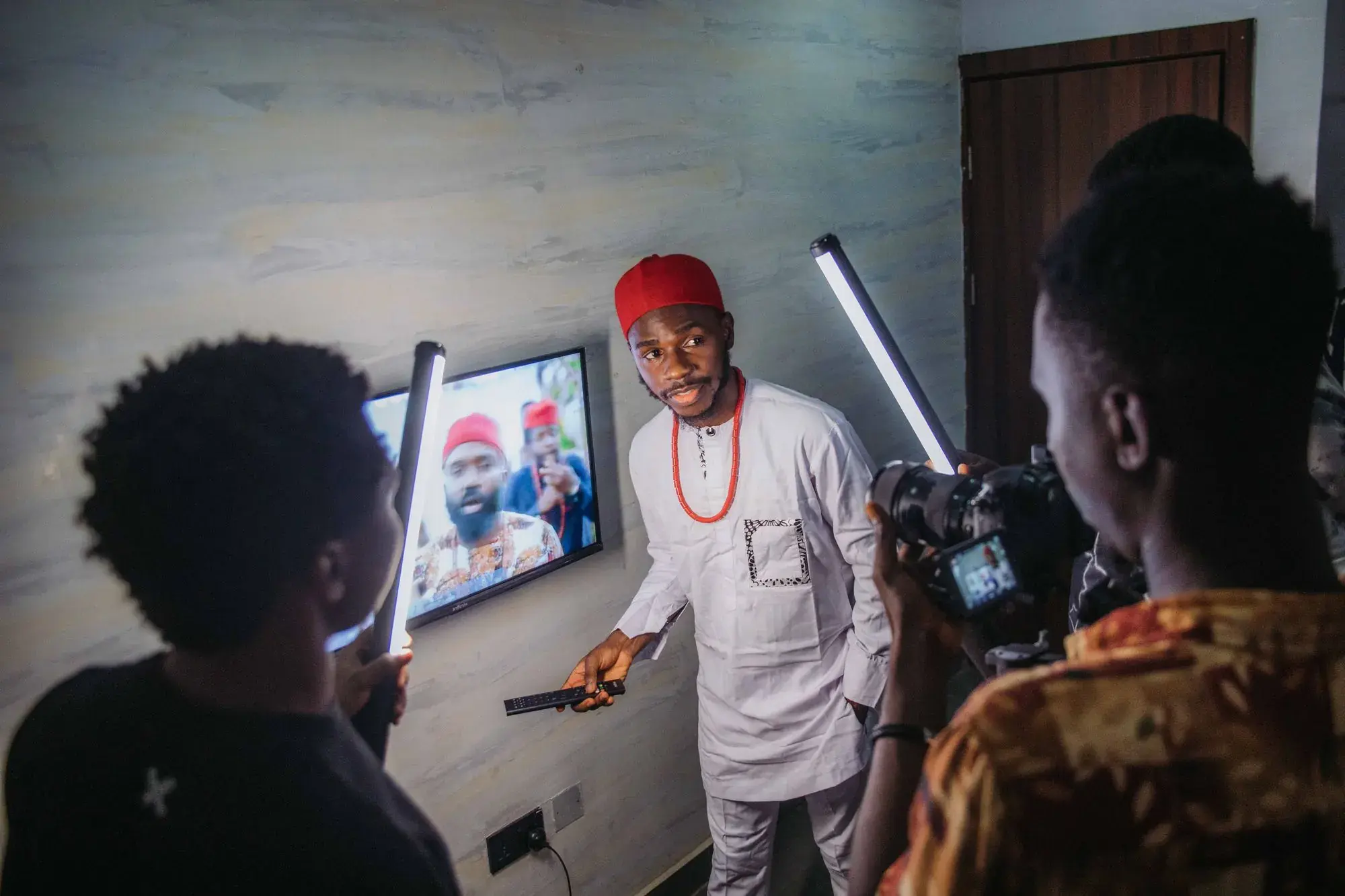
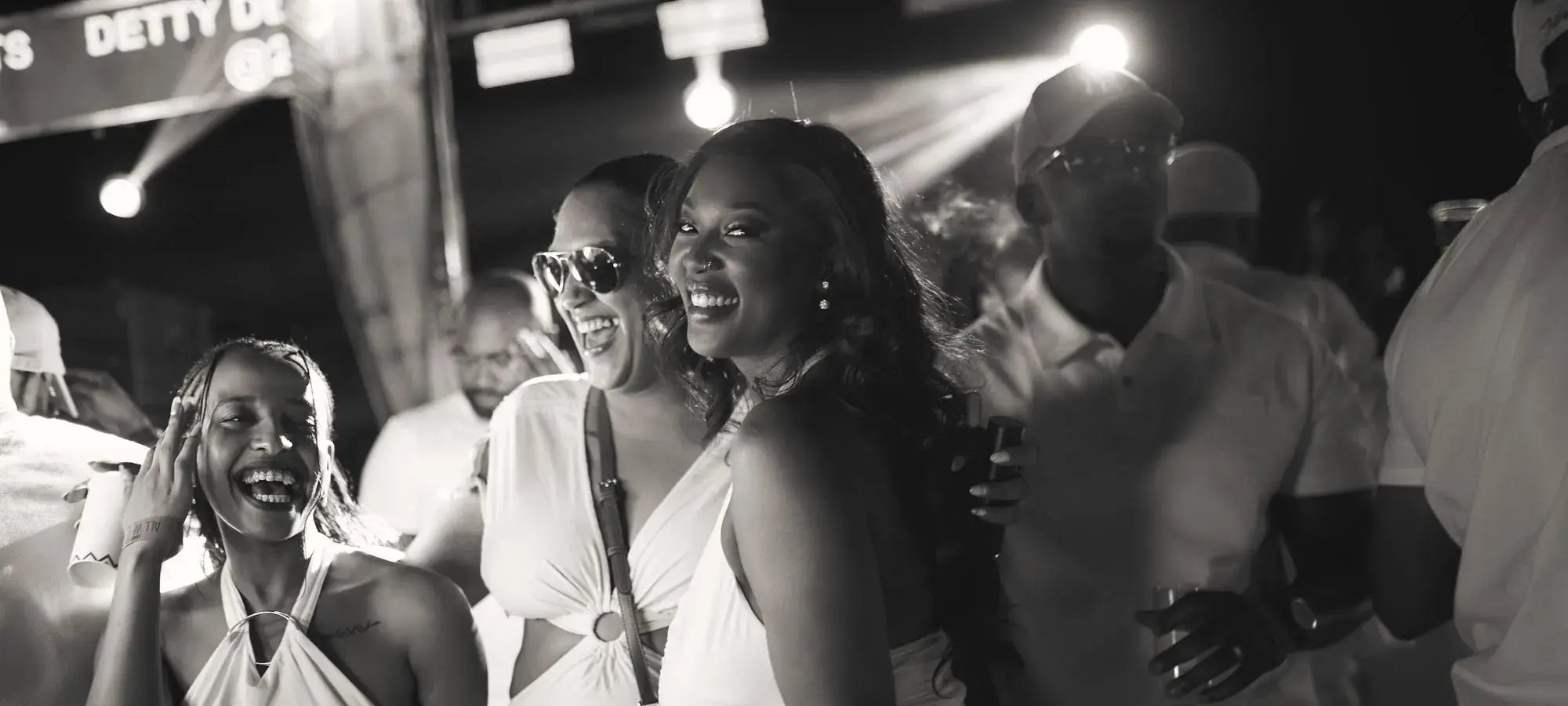
The best brand videos are made before the camera rolls.
Video is now the format customers trust most to decide what to buy. But what happens before shoot day decides whether you get a video people watch, or one that sits on your page. Here is how to prepare, with the data behind each step.

Emmanuel NjokuCo-Founder & Creative Director
- Published
- Reading time
- 8 minutes
On this page
- Why video deserves this much preparation
- 1. Decide the one thing you want people to feel
- 2. Write the story, and the first three seconds, before you plan the shots
- 3. Use real people wherever you can
- 4. Shoot for the phone, not the cinema
- 5. Prepare your location like you are expecting guests
- 6. Plan one shoot day for every platform
- 7. Agree who signs off, and when
- 8. Use AI as a tool, not a replacement for a story
- How we approach production at Imago
- Sources
People imagine the magic of a brand video happens on set: the lights, the camera, the director calling action. In reality, by the time we arrive on set, most of the important decisions have already been made.
I have seen businesses spend good money on a shoot and walk away with footage they cannot use. Not because the crew was bad, but because nobody agreed on what the video was for. With video now at the centre of how people choose brands, that is an expensive mistake.
Why video deserves this much preparation
Video is no longer optional. In Wyzowl’s 2026 survey, 91% of businesses said they use video as a marketing tool, 83% of video marketers said it had directly increased sales, and 85% of consumers said a video had convinced them to buy a product or service[1]. When asked how they would most like to learn about a product or service, 63% of consumers chose a short video[1].
Nigeria is moving in the same direction, fast. PwC’s Africa Entertainment and Media Outlook found that Nigeria’s entertainment and media sector grew 11.2% in 2024, the fastest in Africa, and projects online video (OTT) services in Nigeria to grow at 8% a year to 2029[2]. DataReportal’s Digital 2026 report puts TikTok’s advertising reach in Nigeria at 47.8 million adults and YouTube’s at 30.5 million[3]. We covered what this means for budgets in our article on video advertising in Nigeria.
The opportunity is real. But so is the competition for attention. That is why preparation matters.
1. Decide the one thing you want people to feel
A brand video is not a brochure. It cannot list ten services, your history and your contact details in sixty seconds. It can make people feel one thing: trust, excitement, relief, pride.
This matters more than most businesses realise. Edelman’s 2025 brand trust research, which surveyed more than 15,000 people across 15 countries, found that the top thing people want from brands is to make them feel good (68%), followed by giving them optimism (62%)[4]. Decide on the feeling first. Every other choice, from the location to the music, should serve it.
2. Write the story, and the first three seconds, before you plan the shots
Good videos have a beginning, a middle and an end, even short ones. Who is the person in the story? What problem do they have? How does their life look different after your business shows up?
Then plan the opening carefully. TikTok’s own analysis of auction ads found that more than 63% of the videos with the highest click-through rates showed their key message or product within the first three seconds[5]. If the first three seconds are a slow logo animation, most people will never see the rest.
This is why we never start with a camera. We start with a script and a storyboard, and we get your sign-off before a single shot is booked.
3. Use real people wherever you can
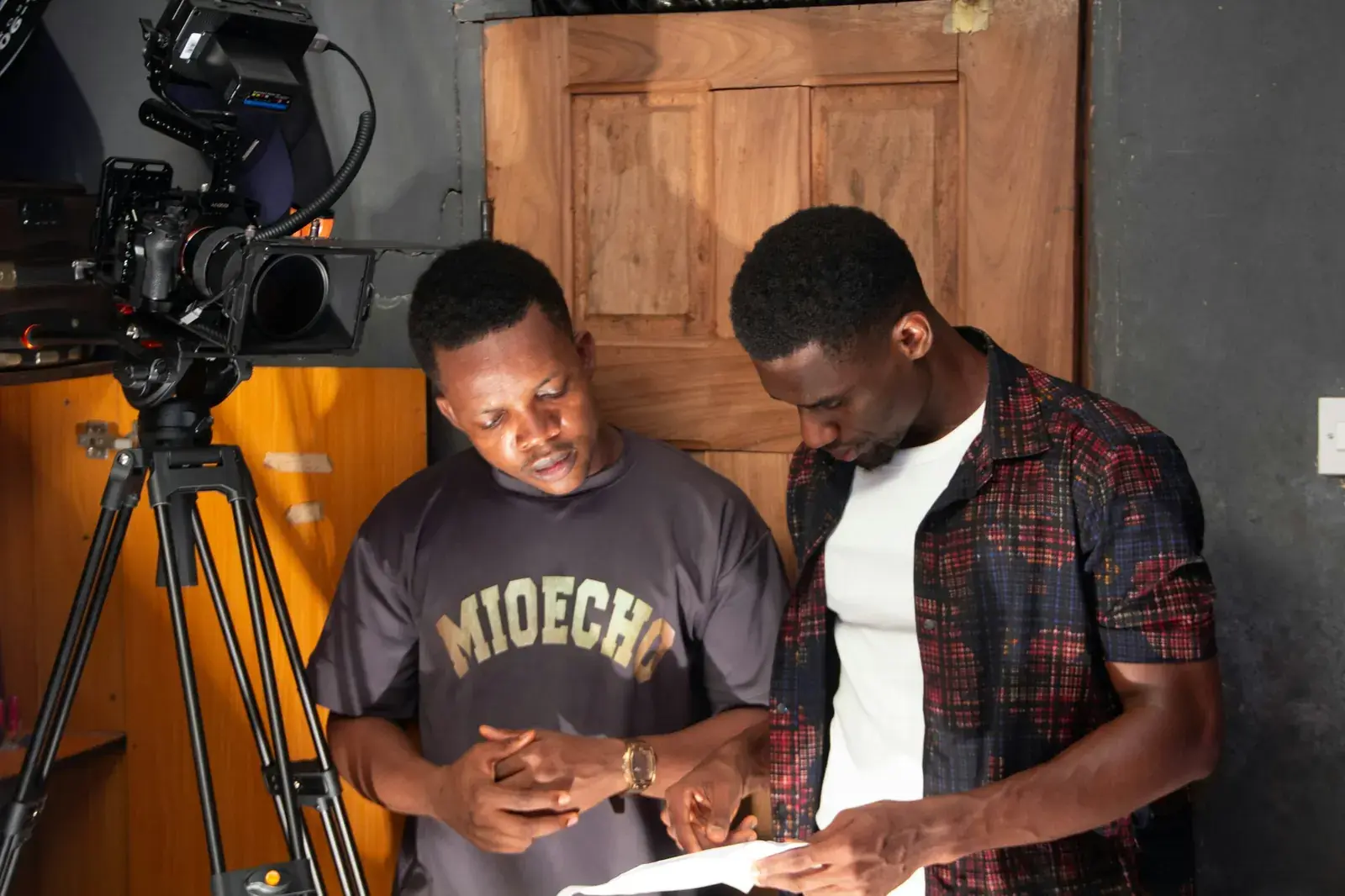
Your customers can tell when they are watching actors reading lines. Your staff, your founder and your real customers carry a credibility that is hard to fake. Edelman found that 75% of people trust domestic brands, compared with 60% for foreign brands, and that 73% say a brand which authentically reflects today’s culture would earn their trust[4]. For a Nigerian business, real Nigerian faces, voices and settings are an advantage, not a compromise.
TikTok’s research points the same way: one in three of its highest-performing auction ads had someone speaking directly to the camera[5]. We wrote more about why founder-led content works in our article on putting your founder on camera.
People will be nervous at first, and that is normal. A good crew knows how to make people comfortable, and often the best moments come after the planned take is finished.
4. Shoot for the phone, not the cinema
Most people will watch your video on a phone, held upright, often in a noisy place. Plan for that from the start:
- Shoot vertical versions. TikTok found vertical videos had a 25% higher six-second watch-through rate on average[5].
- Add on-screen text. 40% of TikTok’s highest-performing auction ads used text overlays[5], and captions help people who watch with the sound off.
- Keep it short. 71% of respondents in Wyzowl’s survey believe videos between 30 seconds and two minutes are the most effective[1].
5. Prepare your location like you are expecting guests
Clean the space. Remove clutter, old banners and anything carrying another brand’s logo. Tell your staff about the shoot so they are dressed for it.
In Lagos, plan around power, light and noise. A generator running in the background or a busy road outside can ruin audio that looked perfect on paper. Confirm power backup, check the space at the time of day you will shoot, and build traffic into the call times.
6. Plan one shoot day for every platform
One shoot day should give you far more than one video. With planning, the same day can produce a main brand film, vertical cuts for Instagram and TikTok, still photographs for your website, and behind-the-scenes clips for stories. If you only plan for the main video, you leave most of the value behind.
7. Agree who signs off, and when
Nothing slows a project like five people giving feedback at different times. Choose one person who approves the script, the edit and the final video, and agree how many rounds of changes are included before editing begins.
8. Use AI as a tool, not a replacement for a story
AI is now part of production. Wyzowl found 63% of video marketers have used AI tools to create or edit videos, up from 51% a year earlier[1]. We use it too, for transcription, rough cuts and versioning. But AI cannot decide what your brand should make people feel. That is still a strategy and storytelling decision.
How we approach production at Imago
At Imago Dynamics Media, every production follows the same five stages, and every stage has an owner, an output and a sign-off from the client.
- 01Audit and positioning: what the brand needs to be known for, and what the video must achieve.
- 02Strategy and content plan: the feeling, the story, the audience and where the video will live.
- 03Pre-production: script, storyboard, casting, location and schedule, all signed off before the shoot.
- 04Production: a crew built for the job, with our core team plus specialists such as videographers, photographers and editors.
- 05Post-production and distribution: the main film plus platform-specific cuts, captions and stills, ready to publish.
It is not the glamorous part of filmmaking. But it is the reason the glamorous part works.
Sources
- [1]Wyzowl, Video Marketing Statistics 2026. wyzowl.com↑
- [2]PwC Africa Entertainment and Media Outlook 2025 to 2029, reported in THISDAY, 24 October 2025. thisdaylive.com↑
- [3]DataReportal, Digital 2026: Nigeria. datareportal.com↑
- [4]Edelman, 2025 Trust Barometer Special Report: Brand Trust, From We to Me (summarised by O’Dwyer’s, 19 June 2025). odwyerpr.com↑
- [5]TikTok for Business, “9 creative tips to drive auction ad performance.” ads.tiktok.com↑